This article is intended for the manager or administrator of the company's policies
Keeping Track of Your Company's Policies
The policy and procedure management system is designed for anyone responsible for managing your company's internal handbook, policies, and procedures, including policies, standard operating procedures (SOPs), work instructions, standards, and similar documents.
It serves as a centralized hub for your company's handbook and internal guidelines, helping you maintain an up-to-date overview of all active company procedures. The system comes with pre-defined categories for common company procedures, which you can easily customize to fit your specific needs and workflows.
- Human Resources (HR) Policies and Procedures
- Health and Safety (H&S) Policies and Procedures
- Expense and Travel Policies
- Financial Policies (e.g., accounting, budgeting)
- IT and Software Usage Policies
If you need to store various manuals and instructions for instruments or other company assets, we recommend managing them separately in the Manuals Organizer.
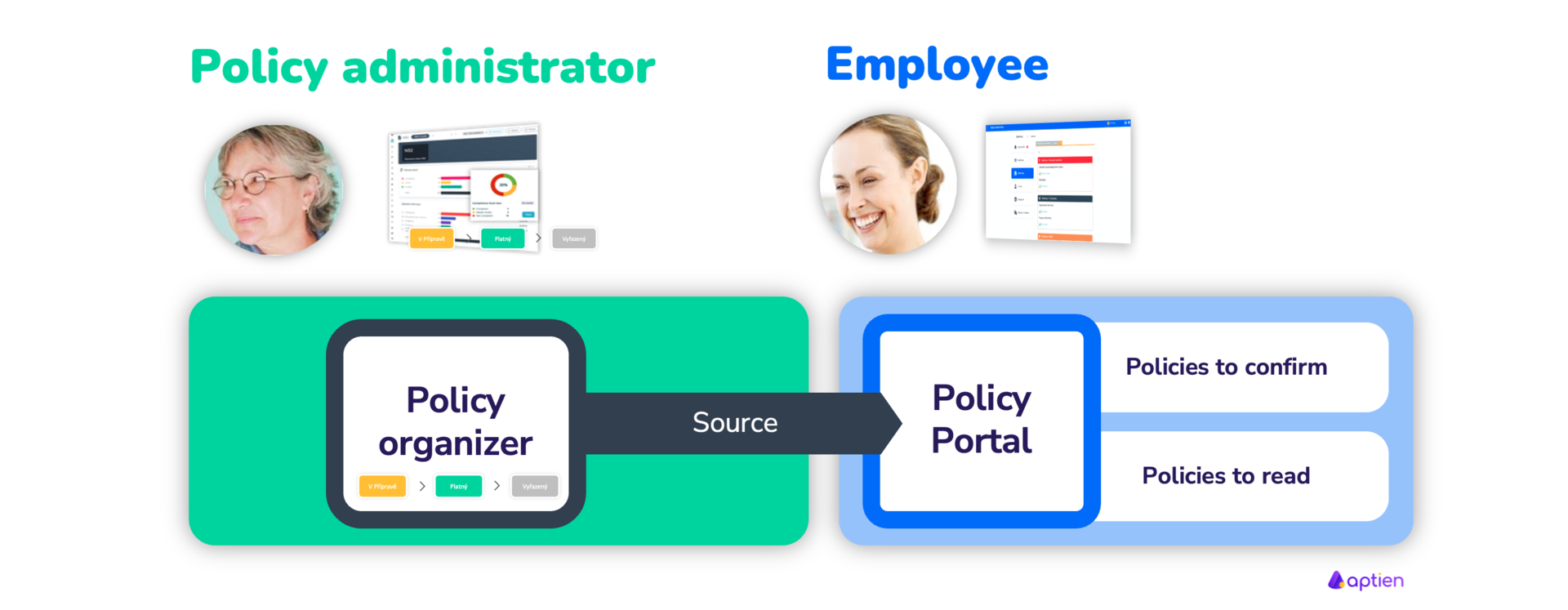
Your Policy & Document Organizer Fuels Your Policy Portal
If you actively use Aptien, this organizer serves as the central hub for your Policy Portal and for tracking employee acknowledgment of critical policies and documents. Documents managed here are readily available to employees through the portal's policy overview and can be included in distribution lists.
How to Attach Policies
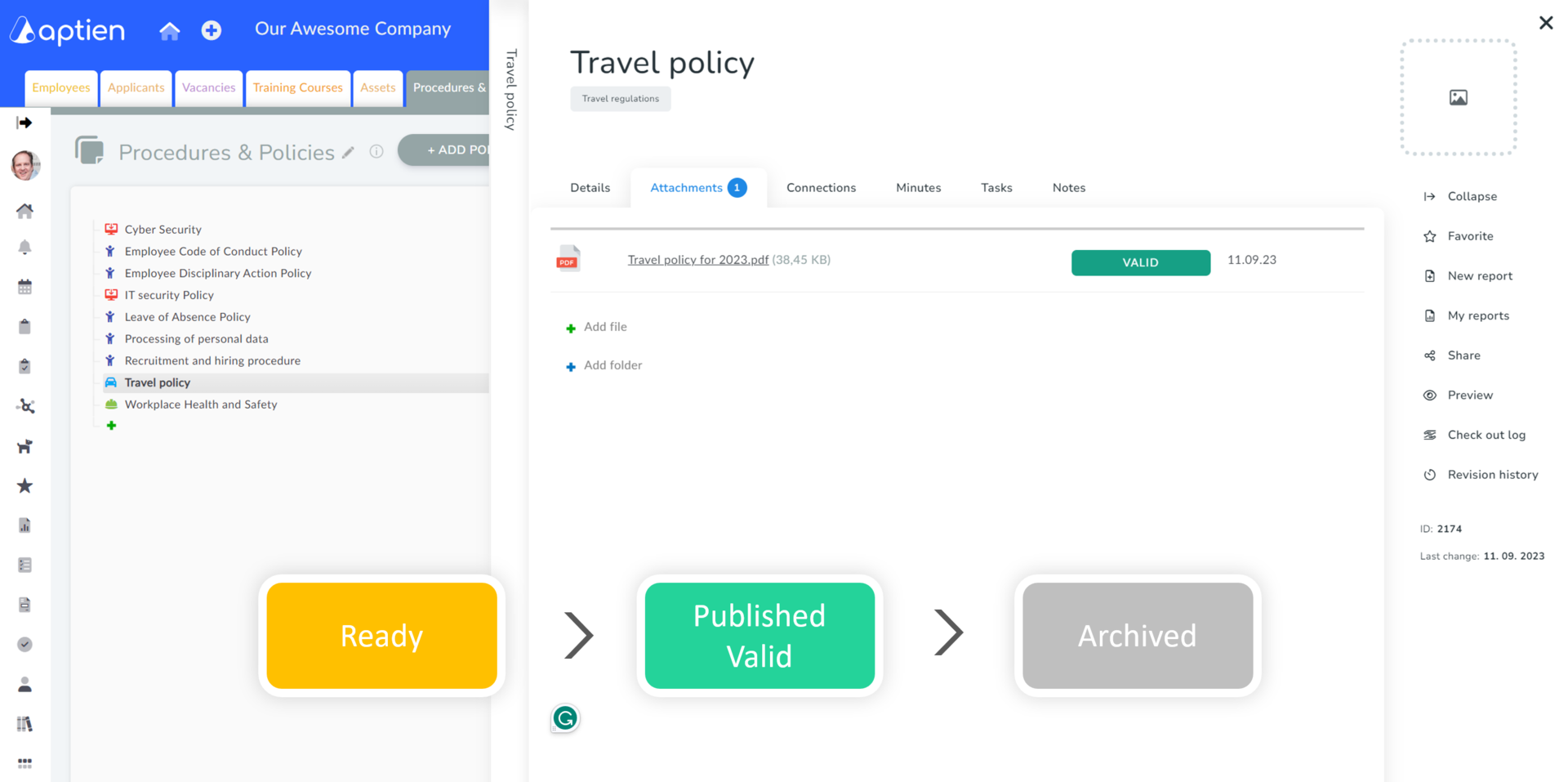
- Attach specific procedures and policies as attachments (e.g., PDF, Word, or other document types). While the overall policy (e.g., Travel Policy) is managed as an ongoing record in your policy management system, each individual version (e.g., the 2023 Travel Policy) is valid only for a specific period. You define this validity period by setting a status for the attachment.
- A newly added document automatically begins with the "Ready" status. You will set the effective date (publication date) and the expiration date for each document separately.
- Within the policy management system, attachments are managed as controlled documents. This means that individual documents follow a controlled lifecycle and thus progress through statuses (Ready > Published > Archived). If your organization uses the Employee Policy Portal, only documents with a Published status will be visible to employees.
How to Set Up and Manage Your Company's Internal Procedures
- First, identify the main areas of your company's policies and organize them into categories.
- Next, document the specific steps or guidelines for each internal procedure and assign them to the relevant categories.
- Finally, upload any supporting documents for these procedures and set their publication or effective date.