Smart Data Organizers
Think of Organizers as your smart digital filing cabinets. Each Organizer focuses on one core part of your business—like Employees, Contracts, or Company Assets. Inside, your information is neatly stored as records
You can add information in 4 common ways:
- Quick manual entry is the most common method. You can gradually add your data into Organizers.
- Import data from external sources such as Excel spreadsheets or other tables where you store information.
- Use the API to integrate with another system—for example, a payroll system—to automatically add data to your Employees Organizer.
- Automatic email inbox processing.
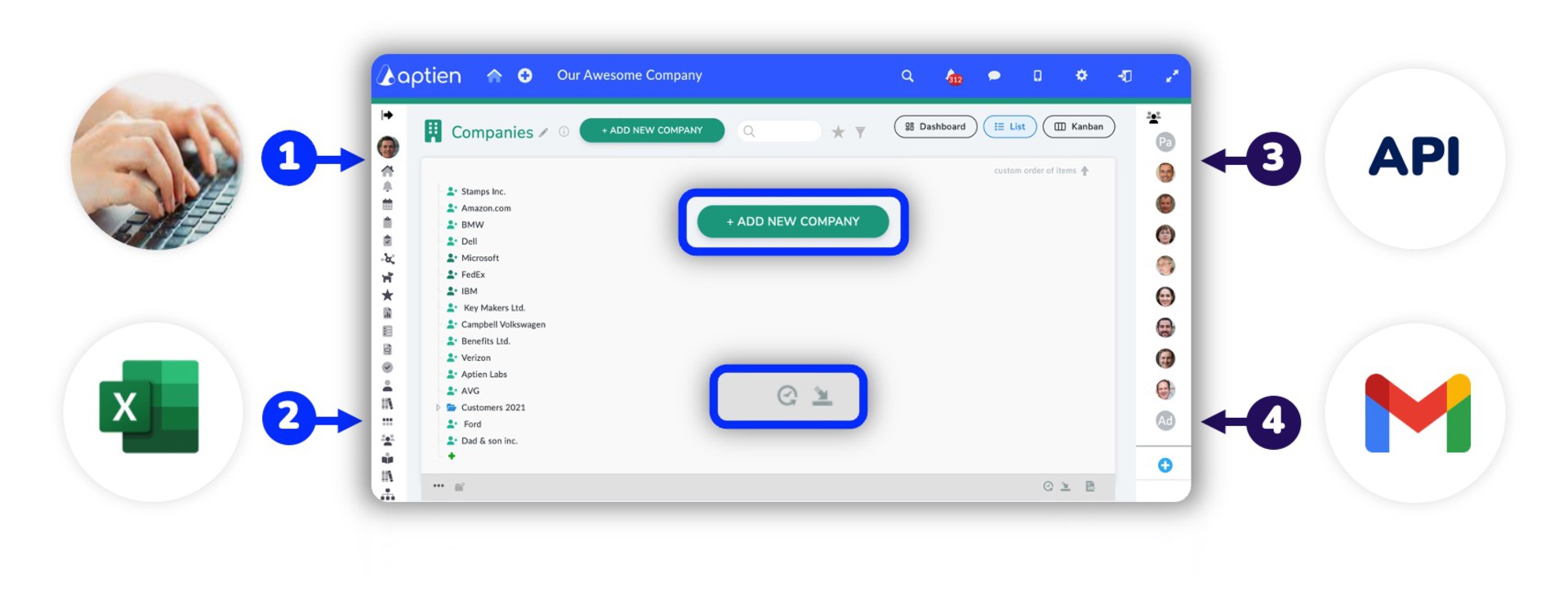
1. Quick Manual Entry (Best for Daily Tasks)
Add records one by one as your day moves. Perfect for log-as-you-go items like incoming invoices, new hires, or fresh customer contacts. Just click "Add Record," fill in the blanks, and you are good to go
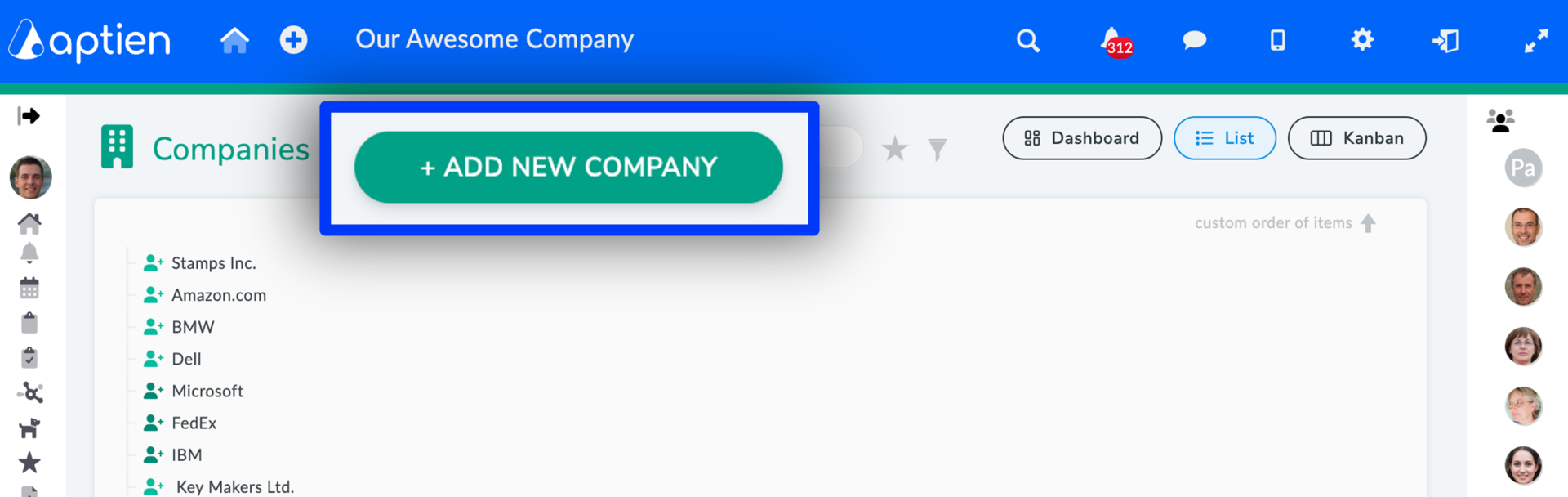
2. Bulk Data Import
Another method of data entry is by Group import from Excel or other tables with information, this can be done either initially or anytime while using the system. When you are uploading data at a later stage, you have to ensure that you have your original file cleaned up to avoid duplicity. The import does not check duplicity. It does not limit the user in any way and lets you input anything you wish.
3. Integrating with Other Systems via API
- You can also add data to your system by using our open web services (APIs). These APIs let you send data to Aptien and get data from it.
- For example, our APIs can automatically update your employee records directly from your payroll system.
- This ensures you always have up-to-date data.
- If you use other software to manage your business data and need to connect it with Aptien, our integration features are built for exactly that.
- Common examples of what you can integrate include employee information, assets, or projects.
4. Automatic email inbox processing
- Automated extraction from the email inbox
- Each incoming email creates a record in the system, and its attachments are saved as file attachments